
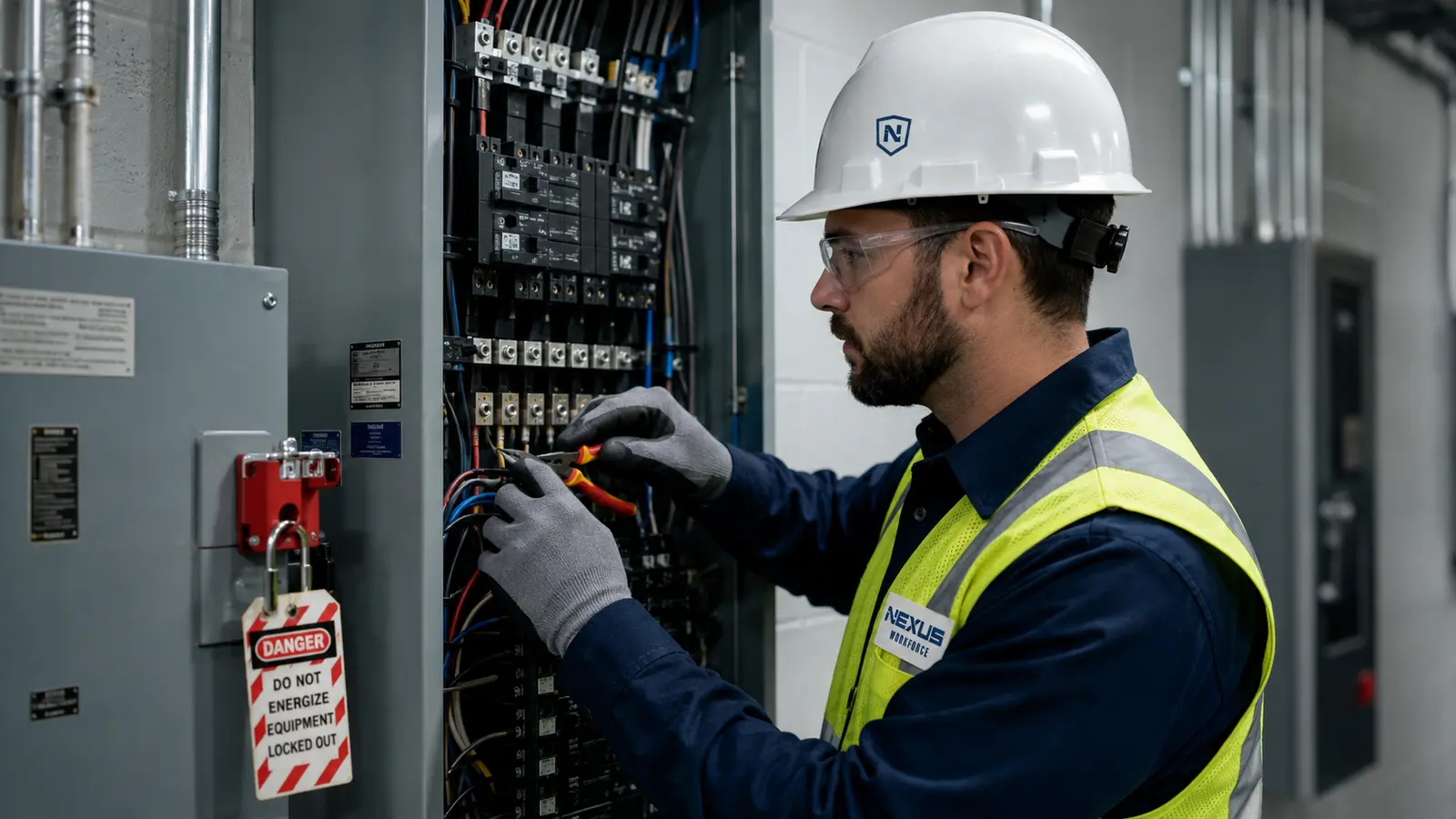
Electrical staffing decisions influence more than headcount. They affect how safely a crew integrates, how quickly work begins, how clearly field leaders communicate, and how reliably the project maintains production. That is why “field-ready” must mean more than having electrical experience. A field-ready professional arrives prepared to work within the contractor’s safety program, production standards, reporting structure, and jobsite expectations from the first shift.
For contractors, identifying this level of readiness supports stronger projects, safer jobsites, and better workforce decisions. For electrical professionals, clear expectations create a better opportunity to demonstrate their skills and contribute to the crew. Nexus Workforce helps connect both sides by evaluating the assignment as carefully as the candidate.
Relevant Trade Experience Must Match the Work
A worker’s background should align with the work being performed, whether the assignment involves commercial construction, industrial installations, or infrastructure projects. General electrical experience is useful, but it does not automatically confirm readiness for every environment. A commercial electrician may be experienced with branch circuits, conduit installation, lighting systems, and tenant improvements. An industrial assignment may require familiarity with equipment installations, controls, larger raceway systems, or demanding operating environments.
The selection process should examine the tasks the electrician has completed, the type of projects involved, and the level of supervision required. Nexus Workforce uses the contractor’s scope to create a more specific candidate profile rather than relying only on a job title or number of years in the trade.
Safety Readiness Begins Before Arrival
Safe performance starts with preparation. Field-ready electrical professionals understand that each contractor and project can have different procedures for PPE, site orientation, pre-task planning, access control, hazard communication, and reporting concerns. They arrive with the required basic equipment, pay attention during orientation, and ask questions when expectations are unclear.
Staffing partners should reinforce these requirements before deployment. Contractors can improve readiness by sharing the arrival location, shift time, supervisor, required PPE, tool expectations, and any project-specific orientation details. Clear information reduces confusion at the gate and helps the new team member begin the assignment with the right mindset.
Production Standards Matter as Much as Technical Ability
Technical knowledge does not operate separately from productivity. A field-ready electrician understands that quality, pace, planning, and material control work together. The person should be able to follow drawings and direction, organize the immediate work area, protect completed installations, and communicate when materials or information are missing.
Contractors should define the expected level of independence for each role. A helper, apprentice, journeyman, lead electrician, and foreman will contribute differently. When the role is clearly described, Nexus Workforce can focus on candidates whose experience and decision-making ability are appropriate for the assignment.
Communication Keeps Crews Aligned
Construction projects depend on structured communication. Field-ready professionals know who they report to, how daily tasks are assigned, and when to raise a question or concern. They listen to the foreman, communicate delays early, and avoid making assumptions that could lead to rework.
This is especially important when supplemental workers join an established crew. The contractor should explain the chain of command and daily planning process. The worker should respect that structure and provide clear updates. Strong communication helps the entire team coordinate with other trades, protect the schedule, and respond to changing site conditions.
Reliability Is a Core Part of Field Readiness
Even highly skilled electricians cannot support a project if they are not consistently available and prepared. Reliability includes confirming the schedule, understanding transportation and parking requirements, arriving on time, bringing required tools, and communicating promptly if a problem occurs. These fundamentals protect the foreman’s labor plan and reduce disruption for the rest of the crew.
A Better Screening Process Produces Better Workforce Decisions
Evaluating field readiness requires consistent questions. A practical screening process should review relevant project experience, specific electrical tasks, preferred work environments, level of independence, availability, transportation, basic tools, and understanding of jobsite expectations. References and work history can provide additional context, but the most useful questions connect directly to the upcoming assignment.
Nexus Workforce helps contractors organize these requirements before the search begins. The more clearly a contractor defines the scope, timeline, shift, location, and crew structure, the more focused the selection process can become. This supports faster decisions without reducing the importance of fit.
Onboarding Confirms the Match
Selection is only the first step. A short, organized onboarding process helps translate the staffing decision into field performance. The contractor should confirm site rules, work areas, reporting relationships, break procedures, documentation, and quality expectations. Early feedback from the foreman can then identify whether the professional’s skills and work habits match the assignment.
This feedback also improves future staffing. When Nexus Workforce understands which experience, behaviors, and communication practices produced a successful placement, the profile for similar projects becomes more precise.
Field-Ready Talent Strengthens the Entire Project
Field readiness is the combination of relevant electrical experience, safety awareness, productivity, communication, and reliability. Contractors that evaluate all five areas are better positioned to protect their schedule and integrate supplemental talent effectively. Electrical professionals also benefit because they receive clearer information about the work and what success requires.
Nexus Workforce provides electrical staffing support for commercial construction, industrial work, and infrastructure projects across North Carolina and South Carolina. Need qualified electrical professionals who are prepared for the realities of your jobsite? Start a staffing request with Nexus Workforce and share the scope, location, schedule, and roles your project needs.